
Tata Motors was the biggest loser in the Sensex pack, skidding 1.77 per cent, followed by SBI, Power Grid, Tata Steel, Infosys, UltraTech Cement, Titan, Larsen & Toubro, Reliance Industries and Maruti. On the other hand, IndusInd Bank, Bharti Airtel, Asian Paints, NTPC, HCL Technologies, HDFC and Sun Pharma were the gainers.

Passenger vehicle retail sales in India witnessed a 10 per cent on-year jump in July driven by new model launches and enhanced discounts, industry body FADA said on Monday. Total passenger vehicle retail sales rose to 3,20,129 units in July, as compared to 2,90,564 units in July 2023. "Dealers reported benefits from good product availability, attractive schemes, and a wider range of products," the Federation of Automobile Dealers Associations (FADA) vice president C S Vigneshwar said in a statement.

The government said on Tuesday the Reserve Bank of India would consider the US demand for relaxing the branch opening norms for foreign banks in India as per the roadmap prepared by the country's central bank.
The central bank asked lenders to specify potential risks as low, moderate, high and very high

The US Federal Reserve's interest rate decision, quarterly earnings of corporates and domestic macroeconomic data will influence trading in the equity market in a holiday-shortened week ahead, analysts said. Foreign funds' trading activity, monthly automobile sales data and global trends would also guide market movement this week, they added. Markets would remain closed on Monday on account of 'Maharashtra Day'.
The rupee appreciated by three paise to close at one-week high of 60.81 against the US dollar in the previous session on sustained dollar selling by exporters and capital inflows.

Investors' wealth fell by Rs 2.89 lakh crore in two days of market fall, with the BSE Sensex tumbling 796 points on Wednesday, amid weak global market trends ahead of the US Federal Reserve's interest rate decision. Fresh foreign fund outflows and caution ahead of a host of interest rate decisions from global central banks also added to the overall bearish trend. Besides, the US Fed meeting, the BoE (Bank of England) and the BoJ (Bank of Japan) are also scheduled to meet this week.

The intervention was spotted when the rupee hit 59.90 to the dollar or below

Elevated food price-led inflation could become a sore point for markets, which they seem to be ignoring at current levels, observe analysts. Retail inflation in India - as measured by the Consumer Price Index (CPI) - came in at a three-month high of 6.52 per cent in January 2023, compared with 5.72 per cent in December and 5.88 per cent in November 2022. The inflation print for February, according to Madan Sabnavis, chief economist at Bank of Baroda, will be critical for the Reserve Bank of India's monetary policy committee.

If investing in Bitcoin, adopt a three to five-year horizon and invest systematically to gain from its volatility.

A higher-than-expected consumer price inflation (CPI) print for March in the US has dashed hopes of an interest rate cut by the US Federal Reserve (US Fed) in June. Analysts now expect the US central bank to start cutting rates in September, provided inflation remains in check and oil prices remain supportive. The markets, analysts believe, partially factored in this possibility.

The $5.7 billion total includes $1.6 billion in fines separately imposed by the US Federal Reserve on the five banks.

Announcing her appointment, IMF Managing Director Christine Lagarde hailed the Mysore-born Gopinath as "one of the world's outstanding economists with impeccable academic credentials, a proven track record of intellectual leadership and extensive international experience".
The Reserve Bank of India has told banks not to levy penal charges for non-maintenance of minimum balances in any inoperative account.

PowerGrid was the top laggard in the Sensex pack, shedding around 2 per cent, followed by IndusInd Bank, Reliance, L&T, UltraTech Cement and Bajaj Finance.

Top gainers in the Sensex pack included Infosys, Bajaj Finance, Maruti, HUL, HCL Tech and Reliance Industries, while M&M, IndusInd Bank, ITC, PowerGrid and L&T were among the losers. The NSE Nifty settled 190.80 points, or 2.51 per cent, down at 7,801.05.

A yellow glow is likely to stand out amid grey geopolitical clouds in 2023, with gold price projected to touch Rs 60,000 per 10 grams in the Indian market as more investors veer towards safe-haven assets. In a year where volatility was more a norm than an exception, gold prices in the international market oscillated from a peak of $2,070 per ounce in March to a low of $1,616 per ounce in November and is steadily recovering since then, according to market experts. At the beginning of 2022, gold prices were around $1,800 an ounce.

HCL Technologies was the biggest gainer in the Sensex pack, rising 5.58 per cent, followed by Tata Consultancy Services and Infosys, State Bank of India, Tech Mahindra, Tata Steel, NTPC and Wipro. In contrast, Nestle, Bharti Airtel, Maruti and ITC were among the laggards.

Shares of Yes Bank tanked over 15.52 per cent. Other losers in the Sensex pack included Tata Steel, Maruti, SBI, RIL, Tech Mahindra, ONGC, Vedanta, Bajaj Finance, Hero MotoCorp and TCS, falling up to 3.66 per cent.

In December, Aisha Shah was named as Partnerships Manager at the White House Office of Digital Strategy.

Gold prices hit record high in the third week of March as fears of bank collapses and high inflation led investors to the traditional safe haven. Gold prices are often inversely correlated to dollar strength because the international price is dollar-denominated. The Federal Reserve's (Fed's) stance indicates that the dollar may appreciate further since it is prepared to keep pushing up policy rates. But demand for gold is also up - the World Gold Council claims central banks are buying in addition to private demand.

Benchmark indices failed to hold on to early gains and closed in the red for the seventh straight session on Thursday, with participants remaining in wait-and-watch mode ahead of the RBI's interest rate decision. Unabated selling by foreign funds added to the pressure, though a modest recovery in the rupee cushioned the fall, traders said. After rallying in early trade, the 30-share BSE Sensex came under selling pressure in the afternoon session and closed 188.32 points or 0.33 per cent lower at 56,409.96.

UltraTech Cement was the top gainer in the Sensex pack, rising 3.06 per cent, followed by IndusInd Bank, ICICI Bank, HDFC Bank, Titan, Axis Bank, SBI and Reliance Industries. NSE Nifty advanced 78.35 pointsto close at 14,814.75.

By piling more pressure on governments, central banks risk not accomplishing much and yet provoking a political backlash that could threaten their independence.
India has decided to authorise the country's biggest lender SBI to promote rupee trade with Russia and soon Moscow will name its bank to operationalise the mechanism, exporters' body FIEO said on Wednesday. The RBI in July issued a detailed circular asking banks to put in place additional arrangements for export and import transactions in Indian rupees in view of increasing interest of the global trading community in the domestic currency. Currently, a large part of bilateral trade between India and Russia is getting settled in rupee due to sanctions imposed by the US and Europe following Moscow's attack on Ukraine.

Nine of the 10 most valued firms faced a combined erosion of Rs 1,87,808.26 crore in market valuation last week, with HDFC Bank and Reliance Industries taking the biggest hit amid an overall weak trend in equities. Last week, the BSE benchmark tumbled 1,538.64 points or 2.52 per cent amid concerns that the US Federal Reserve might raise interest rates further to curb inflation. Fresh foreign fund outflows also dented investor sentiments. Barring ITC, all 10 firms, including Tata Consultancy Services (TCS), Infosys, ICICI Bank and Hindustan Unilever, were the laggards.

Days after the US Fed raised the interest rate, the RBI may go in for its third consecutive policy rate hike by at least 35 basis points to check high retail inflation, experts said. The central bank has already announced to gradually withdraw its accommodative monetary policy stance. The Reserve Bank of India's rate-setting panel -- the Monetary Policy Committee -- will meet for three days from August 3 to deliberate on the prevailing economic situation and announce its bi-monthly review on Friday.

After withdrawing record funds in 2021-22, foreign portfolio investors (FPIs) continued their sell-off in the last fiscal too and pulled out Rs 37,631 crore from Indian equities amid aggressive rate hikes by central banks globally. The outflow trend is likely to reverse in the current financial year since India has the best growth potential in the financial year 2023-24 (FY24), VK Vijayakumar, chief investment strategist at Geojit Financial Services, said. Market analysts believe that FPI flows in the current financial year would be decided by a host of factors, such as the US Federal Reserve's policy stance, oil prices movement and development in the geopolitical situation.

Automobile (auto) retail sales in India grew by an impressive 14 per cent in July compared to the same period last year, driven by a surge in the rural economy, good product availability, and product launches. While passenger vehicles (PVs) saw a 10 per cent increase during this period, inventory levels have surged to a historic high of 67-72 days in PVs, equating to Rs 73,000 crore worth of stock, according to the Federation of Automobile Dealers Associations (Fada). This poses a risk to dealer sustainability. Inventory levels in July 2023 were only 50-55 days, equating to a stock worth Rs 49,833 crore. In June 2024, inventory was between 62 and 67 days, with a stock value of Rs 60,000 crore.

'The risk is in not being invested and missing out on an upmove.'

Mixed earnings and not so encouraging macroeconomic data dented sentiment, Ajit Mishra, VP - Research, Religare Broking Ltd said. In twin blows to Indian economic revival, higher food prices drove retail inflation to a five-month high of 7.4 per cent, while factory output fell for the first time in 18 months. The second consecutive month of rise in consumer price index (CPI)-based inflation will add to the pressure on the Reserve Bank of India (RBI) to again raise interest rates to tame high prices. In the broader market, BSE Midcap declined 0.73 per cent while smallcap dropped 0.45 per cent.

RBI would get the comfort of meeting its 8 per cent January Consumer Price Index-based inflation target, BofA-ML said, adding that 'we expect the RBI to cut 75 bp in 2015 from February with inflation on course to 6 per cent in January 2016'.
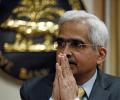
Uncertainty is emerging as the only certainty, said RBI Governor Shaktikanta Das as he emphasised on continued policy support at the December MPC meet during which members expressed concerns over spread of the Omicron variant of coronavirus, as per the minutes of the rate-setting panel released on Wednesday. After three days of deliberations, the six members of the Monetary Policy Committee (MPC) on December 8 unanimously voted for status quo on policy rates for the ninth consecutive time. At the meeting, the RBI Governor said risks stalking the global economy have amplified with rapid spread of the virus mutations, including the Omicron variant, leading to countries scrambling for restrictions.

Forex market was closed on Thursday on account of Ganesh Chaturthi.

Rupee, he said, is not in shambles and "we should not be overtly pessimistic".

Trading in the domestic stock market would be influenced by trends in the global equities, macroeconomic data and foreign fund movement in a holiday-shortened week, analysts said. Markets may face volatile trends on Monday after Federal Reserve Chair Jerome Powell's speech at the Fed's annual economic symposium in Jackson Hole on Friday.

Sentiments were also bearish largely in tandem with a sell-off in global markets as US Treasury yields surged to multi-year highs on robust economic data and comments from the Federal Reserve, sparking fears of accelerating inflation, brokers said.
